Allow me to introduce you to Rebecca Lewis (of the Newport Lewises).
Known as a “robber-baron,” Rebecca’s grandfather cashed in on the westward movement, buying up land and selling it to the railroads. He amassed a fortune. Then, according to his neighbors, he built an obscenely large mansion. Still, his fortune grew.
He had hoped to pass his vast holdings down to his son, but Rebecca’s grandfather died without a will. His wife lost no time filing suit. A long court battle lined the pockets of a couple of lawyers. The rest of the fortune was split between Rebecca’s father and his stepmother.
Rebecca was raised by servants, while her parents sailed back and forth across the Atlantic to party and gamble away what was left of their money. In Amelia’s Legacy, her life was already changing as a result of her parents’ wasteful lifestyle. She was left to close up the houses, and dismiss the servants.
In 1929, her father returned to the States to make one last attempt at recovering what he’d squandered. The stock market crashed, and took all hope along with it. He was devastated.
This is backstory–sort of prequel to Carlotta’s Legacy. Rebecca Lewis knows all about struggle. She’d been treated like a princess by her grandfather, and ignored by her parents. She doesn’t expect or understand love.
Riccardo “Ricci” Alvera was raised by parents who were devoted to one another. They were Italian aristocracy, living in the heart of Umbria, in a villa built by his mother’s great-grandfather. Tradition and faith guided all their decisions.
When his father died, Ricci returned home from the military to take over running the estate. There were financial difficulties, but with the help of a faithful servant, he was able to bring it back.
The estate was flourishing when he set out to woo and win the heart of an American woman he’d met while stationed in the Alps. She resisted at first, but he was determined. Though he knew his mother would never approve, he would not give up.
You’ll find Rebecca and Ricci’s story in Carlotta’s Legacy. July 11 ONLY it’s on sale for 99 cents on Kindle.
Carlotta’s Legacy is Book two of the Legacy series. You can download it here: getBook.at/Carlotta
Fireworks. Yawn. Every night for a week before and after the fourth. Diminished sleep. Dogs freaking out. Are those mortar rounds? Really?
Have you ever noticed? There’s a down side to everything.
Yes, it’s summer. I love summer. Downside? Hot. Humid.
Upside? Take a look–
Homemade stuff. Yum!Gorgeousness!
Downside…yeah, well, they have a purpose, too. As long as they stay on their side of the screen, I’m okay.
We’ve had a mild summer so far, but I know the heat and humidity are…
Just around the corner…
It’s not really that bad in Kentucky. Some days it’s more like a swamp (without the alligators). Air so thick, you can slice it with a knife. Monsoon-like rain, coming up from the Gulf of Mexico. Tropical storms. Hurricane remnants.
Upside? Oh, yes. →
I don’t know, looks like to me, the upside far outweighs the downside. Bright, sunshine-filled days. Birds singing. Squirrels frolicking in the yard.
Yeah, well, that could pretty much happen any time of year here in Kentucky.
Here’s just a few of my favorite summery things:
Summer festivals
picnics!
produce stands
swimming holes
long hikes through the woods
walking the ped-bridge over the Ohio River
I think maybe, just maybe, the way to go is not to look for a downside at all. Maybe just look up. Enjoy the view. Live like it’s summer all the time. OK, maybe that would be hard if you live in Minnesota or Wisconsin. But you can find an upside to every downside if you try.
My voice You shall hear in the morning, O Lord; In the morning I will direct it to You, And I will look up.–Psalm 5:3 NKJV
What’s your favorite thing about summer? What makes your heart sing on a brilliant sunny day?
“The main thing is to keep the main thing the main thing.” I’ll never forget this advice from my former English professor. Her words applied so well both to life and writing projects—then and now.
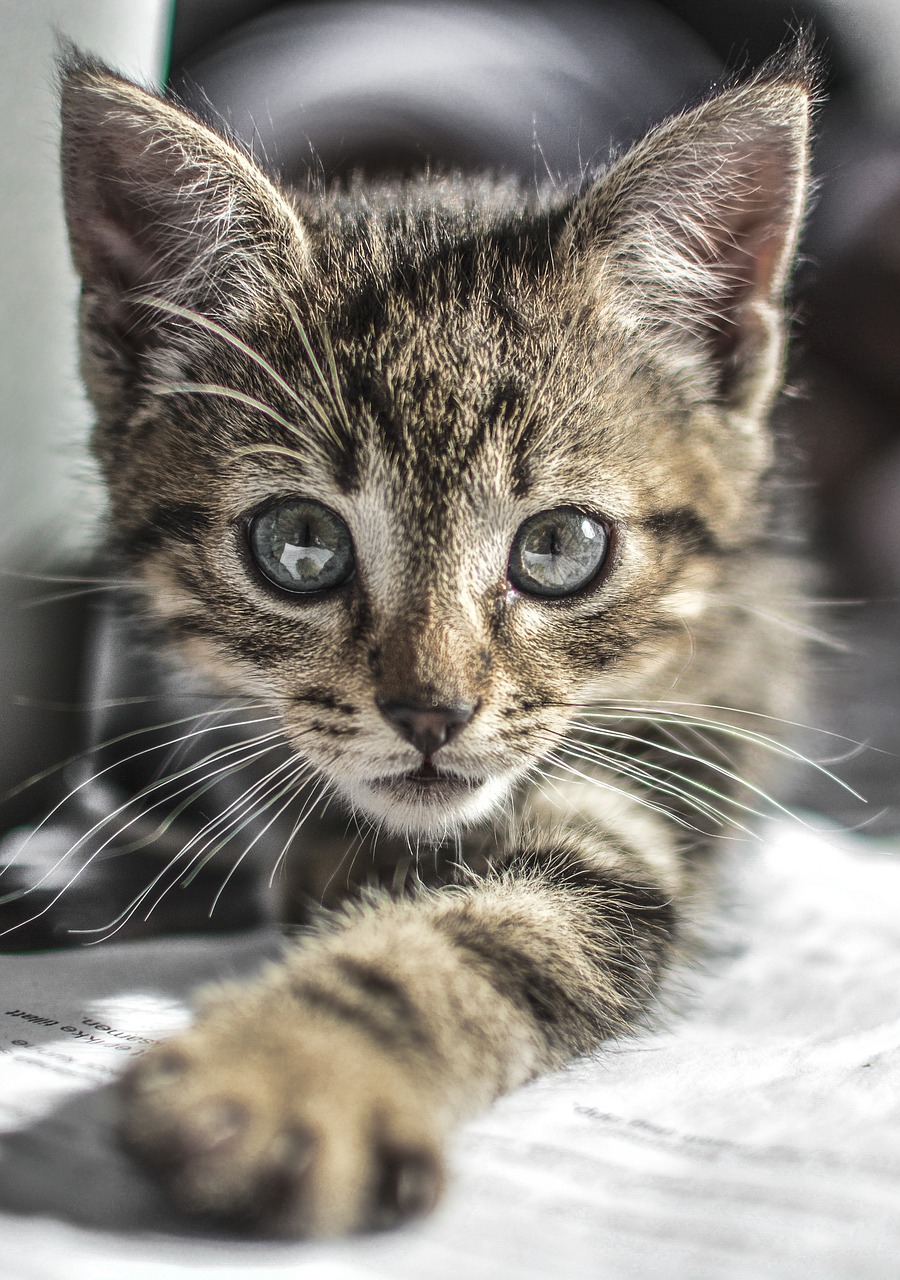
After all, life is full of distractions. As I type, my kitten is batting my feet and demanding to be fed. This interruption leads me to life hack #1 for dealing with distractions.
Pluck the Low-Hanging Fruit.
Have you heard the low-hanging-fruit metaphor before? Some distractions are unavoidable. The trash needs to go out. The kitten needs to be fed. If you have a family, your must-do list is even longer than mine.
There are just some tasks we can’t avoid in a day. Many are great things that we love doing, and others are chores we must do with love.
Complete those tasks before sitting down to write. They are the “low-hanging fruit” you can check off your list, and unless you do, they will nag your brain and zap your creativity.
Put Time Limits on Social Media
Social media can be a black hole. One moment, we sign in to Facebook, and half an hour later, we haven’t even posted what we planned to say.
As writers, most of us can’t avoid social media. It’s how we connect with our friends, readers, and colleagues. However, if we try to write with our inbox open, we’re going to get nowhere. (If your phone pings every time you receive emails or messages, you’ll need to hide it, too.)
Here’s some rule-of-thumb advice:
Only log on to social media if you have a plan. Be prepared to post, give yourself a time limit to browse others’ posts, and then get off.
Don’t let social media control you. If you’re writing and remember something you need to do online, write it on a notepad or sticky note and get back to it later.
Practice Saying No
I once worked for a business where the motto was, “Yes, we can!” While that’s a great slogan for customer service, it’s a death wish if you want to be serious about your writing.
Saying no is hard for some of us, because we don’t like to disappoint people. However, we’ll do ourselves and others a disservice if we don’t learn to pick and choose our commitments.
Before saying yes to one more thing, ask yourself:
Does this choice line up with my goals?
Is this task the best use of my time?
Am I the right person for this commitment, or is someone else?
Believe it or not, saying no can be liberating and allows us to say yes to more meaningful commitments.
Put Your Hand to the Plow, and Don’t Look Back
Luke 9:57-62 recounts three people who talk about following Jesus. One makes an excuse about something he needs to do first, and Jesus warns the other two about checking their priorities.
Jesus tells the last one, “No one who puts his hand to the plow and looks back is fit for the kingdom of God” (Luke 9:62 ESV).
Although this account primarily speaks to our need to follow the Lord, regardless of the cost, I think it also holds an application for how we steward the gifts and responsibilities God gives us.
If God has called us to write—and I believe He has—then every time we let distractions steal our focus, we’re “looking back.”
You’ve made the commitment to write. I have, too. When you have to decide how best to use your time, remember: the main thing is to keep the main thing the main thing.
Author Kristen Hogrefe
Kristen Hogrefe is an author of young adult fiction novels. She teaches language arts for Alpha Omega Academy and serves as a mentor for Word Weavers International. A lifelong Florida resident, she craves sunshine, preferably paired with coffee and a good book.
Her new release, The Revisionary (Write Integrity Press), is the first book in her YA dystopian trilogy The Rogues. It’s a dystopia of a different kind—one where characters look backward to find wisdom to move forward.
Look her up at www.KristenHogrefe.com where she challenges young adults and the young at heart to think truthfully and live daringly.
A Revisionary rewrites the rules. A Rogue breaks them. Which one is she?
Nineteen-year-old Portia Abernathy accepts her Revisionary draft to the Crystal Globe with one goal: earn a Dome seat so she can amend the satellite rules and rescue her brother. Her plan derails when Head Gage Eliab brands her as a suspect in a campus Rogue attack, and in her quest to clear her name, she questions if the vigilante Brotherhood responsible might not be the real villain.
Her shifting loyalties pit her against Luther Danforth, her Court Citizen ally who believes in reform, not revolution. Joining the Brotherhood makes a future with him impossible—and Portia must decide if it’s better to rewrite the rules or to break them.
Can you feel the excitement in the air? No? Just me?
NEW to my Facebook Author Page — a brand new signup for an occasional newsletter–you’ll find the tab on the lower left-hand side (near the bottom of the list). It says, “Newsletter Signup.” 🙂
Sneaky hint: there’s a link to sign up for the newsletter at the bottom of this post. All the new signups will go into a drawing for a couple of books. Along with a print copy (or Kindle if winner prefers), the winner may choose one of several recent Write Integrity Press releases. That includes authors like Fay Lamb, Dena Netherton, Marji Laine, and Kristin Hogrefe. You can check the WIP website here for details about those books.
I’m also on Goodreads. If you’re on Goodreads too, please consider adding Sutter’s Landing to your “to-read” list. Once you’ve read the book, please take a few minutes to review it on Goodreads and Amazon. Don’t know what to say? Five stars and “I loved it!”– will be great, thanks!
Kinsman Redeemer #2
Scenes from a story…
…Leaving some things out, of course. We don’t want any spoilers here. Now for a couple of excerpts from early reviews, and some flagrant boasting about the book. Yikes! The things you have to do in the name of marketing.
…The author’s depiction of life in the segregated south in the 1950s is both realistic and insightful. She paints an accurate picture of how hard the people in this cotton-centric community worked just to live, and she does it with respect, humility, honesty, and without the Hollywood sensationalism or stereotyping. She also shows their faith with gentle, non-threatening assurance. Sutter’s Landing is a sweet, inspirational, and very well written story where the characters come alive on the pages. Their dialogue so realistic you find yourself right there with them…
Sutter’s Landing by Betty Owens is a great sequel to Annabelle’s Ruth. The story which I so enjoyed is continued with new characters and places that expand a small town that I feel I know so well already. The setting is realistic and the characters make the story alive, one you don’t want to put down. I highly recommend this lovely story…
Darkness crept over the landscape. Inside the rough cabin, four children enjoyed the warmth of the fire, as their grandfather rocked in a creakety old chair. Jenny and Fran played at jacks. Bud and little Tom lay on their stomachs, their dirty-socked feet warmed by the fire, stinking up the room. They all waited for what they knew was coming—Granddaddy’s stories. Which one would he tell tonight? Would it be the one about the Mississippi riverboat mired in the mud? Or something entirely new?
A few minutes passed with the crackle of the flames licking up the seasoned wood, the bounce of the little rubber ball, the click of the jacks. The drum of Bud’s fingers in time to some melody that played in his head.
Granddaddy cleared his throat. “Did I ever tell you young’uns about the time—”
Story hour. The period between supper and bedtime, back in the day. All my life, I heard my Dad talk about it. The family didn’t own a radio. Television hadn’t been invented yet. So, what did folks do in the twilight hours as they rested from a hard day’s work?
Imagination roamed free. My dad imagined the riverboat, filled with stranded travelers who tossed coins to the boy who grew up to become his grandfather. Those passengers paid dearly for fresh water. The boy was happy to do it. He hadn’t seen that much money in his entire life. His descriptions drew pictures in Dad’s young mind. The oppressive heat of the Mississippi sun. The stink of the dark, sticky mud. The creak of the big riverboat, weighed down by so many passengers, waiting for rain upriver. It was sure to come. And it did, three days later.
Mister Potato-head. Many of us spend our evenings glued to the television, watching whatever is offered there. Our minds are often unplugged, not imagining at all, just licking up whatever they’re fed.
What if we turn off the television?
Share our childhood memories with our children and grandchildren. Stir the fire of their imaginations. They’ll come to know us better. Who we are. Where we came from. What our early life was like.
Like when friends or family drop in for a visit (do folks still do that). Okay, when you’ve invited friends or family over—don’t turn on the television. Unless it’s prearranged for them to come by to watch a game or a movie. Talk. Share stories, not gossip.
If you live alone, pick up a book. In the quiet, let your imagination run free, spurred by the words on the page. I’m not asking you to put away the television forever, just try it one night a week. Have a quiet night when all you do is let your mind drift.
Dream. Write in your journal. Stir up the memories buried deeply within you.
You could call a friend or family member, if you need to talk. But you’d better find someone who will appreciate your conversation and not be angry that you’ve interrupted their favorite TV show. 🙂
Creativity grows and stretches itself in the quiet hours when we allow it room. Encourage its growth in your children’s minds. Provide them time and tools. A journal or diary, Legos or other building sets, a big white piece of paper and some water paints and brushes. And share your memories.
Sometimes the smallest things mean the most.
Do you have a favorite memory handed down from your parents or grandparents?


 Riccardo “Ricci” Alvera was raised by parents who were devoted to one another. They were Italian aristocracy, living in the heart of Umbria, in a villa built by his mother’s great-grandfather. Tradition and faith guided all their decisions.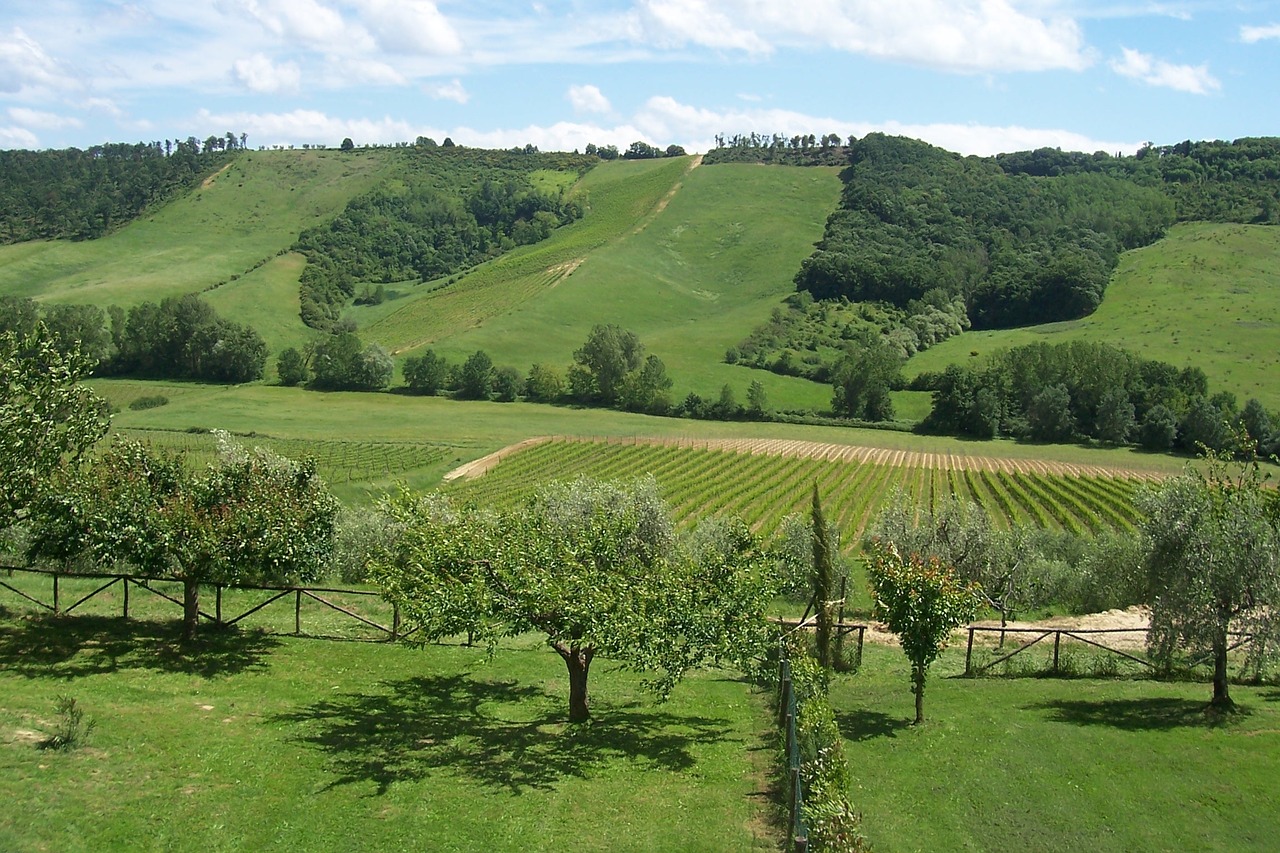








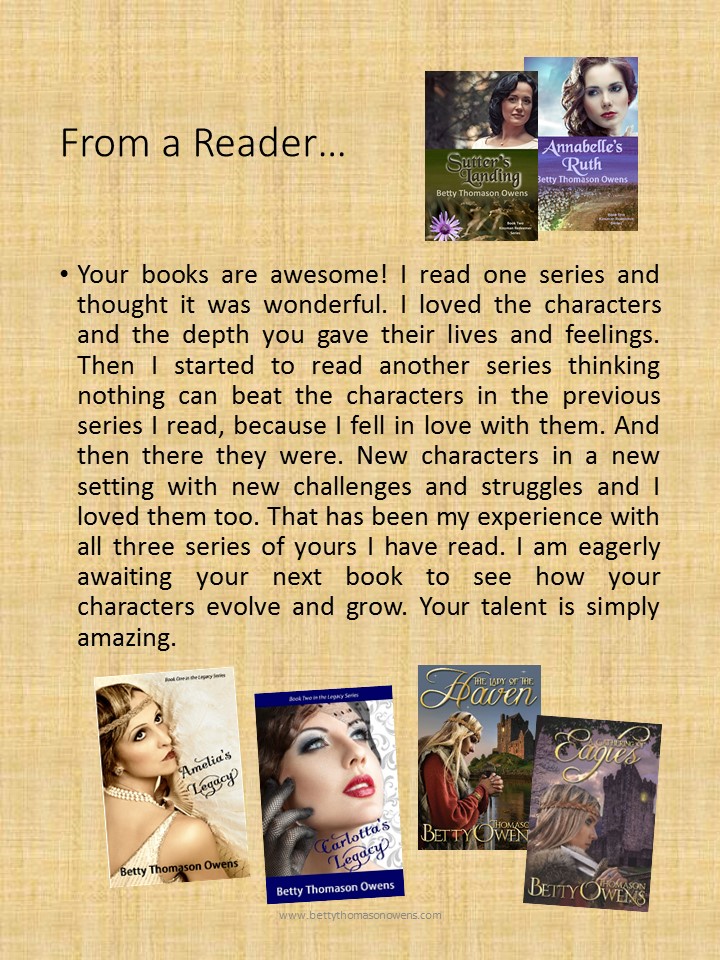


 Betty Thomason Owens