Beyond the Book of Ruth

blue-692467_640“But Ruth replied, “Don’t urge me to leave you or to turn back from you. Where you go I will go, and where you stay I will stay. Your people will be my people and your God my God. Where you die I will die, and there I will be buried. May the Lord deal with me, be it ever so severely, if even death separates you and me.” — Ruth 1:16-17

I love The Book of Ruth. You may remember hearing the passage above, sung or spoken at weddings. Though originally spoken to a mother-in-law who had become more than an in-law, the passage is quite romantic, isn’t it?

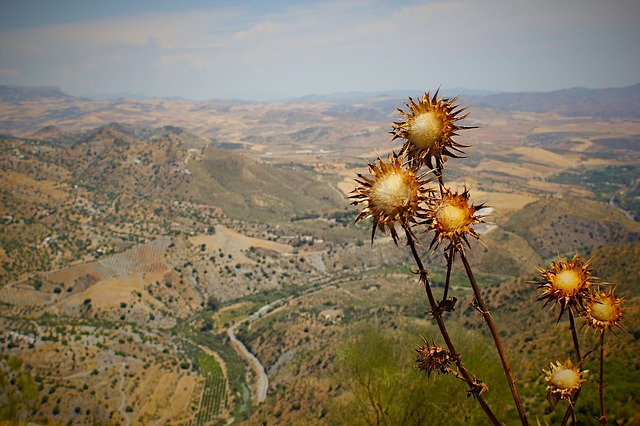
castle-valley-500241_1280I’ve read The Book of Ruth more times than I can count, so I thought I knew the whole story. If you had asked me, I would’ve said, “The Book of Ruth is a wonderful story–a historical account of one of the four women mentioned in the lineage of King David, one of only six  women in the lineage of Jesus.

It’s short–only four chapters–so it doesn’t take long to read. Unless you like to dig. BUT, is it really just history? Is it only a romantic tale? I believe each book is included in the Bible for a reason.

Is there a reason beyond sharing the history of this woman?

When I wrote the novel, Annabelle’s Ruth, I did a little digging. I read and re-read the Biblical story until I could relate it in my own words. But after my novel was published, I was asked to tell a little about the history, so I studied it again.

I was surprised by what I saw.

Especially since I’d read it so many times. How had I missed what I found this time? If you’re familiar with the story, you know how it begins. The widows are leaving their home in Moab. Naomi persuades one daughter-in-law to return to her family, but Ruth refuses to leave. She insists on staying with the woman who has become a mother to her. The woman who’d taught her to believe in the God of the Hebrews.

barley-1117282_1280And I’m sure, you remember how Ruth went out to find work and ended up in the field of a man who was a kinsman of Naomi’s husband. His name was Boaz. He had heard of Ruth. Good things were spoken about her in Ephratah (Bethlehem)–and that was saying something. The Ephrathites could be a little judgmental about their non-Hebrew neighbors.

Boaz first drew my attention and appreciation by choosing to show kindness to this foreign woman who had shown great loyalty and love for his kinswoman. After all, she’d willingly given up the possibility of remarriage and having a family of her own, by following Naomi. That kind of thing was important in those days.

One thing I’ve learned: when you make that kind of sacrifice in life–for love and faith–God sees.

So, Boaz gave orders that his reapers drop extra barley for the woman to pick up. He ordered his men to keep their hands off her. And then he does something that pierced my heart. When he speaks to Ruth, he tells her to stay in his fields, so he can protect her. And then he invites her to partake of the water provided for his workers. I was immediately reminded of Jesus at the well in Samaria, offering living water to the woman at the well.

basket-1195754_1280Ruth 2:10-14 “Boaz went over and said to Ruth, “Listen, my daughter. Stay right here with us when you gather grain; don’t go to any other fields. Stay right behind the young women working in my field. See which part of the field they are harvesting, and then follow them. I have warned the young men not to treat you roughly. And when you are thirsty, help yourself to the water they have drawn from the well.”

10 Ruth fell at his feet and thanked him warmly. “What have I done to deserve such kindness?” she asked. “I am only a foreigner.”

11 “Yes, I know,” Boaz replied. “But I also know about everything you have done for your mother-in-law since the death of your husband. I have heard how you left your father and mother and your own land to live here among complete strangers. 12 May the Lord, the God of Israel, under whose wings you have come to take refuge, reward you fully for what you have done.”
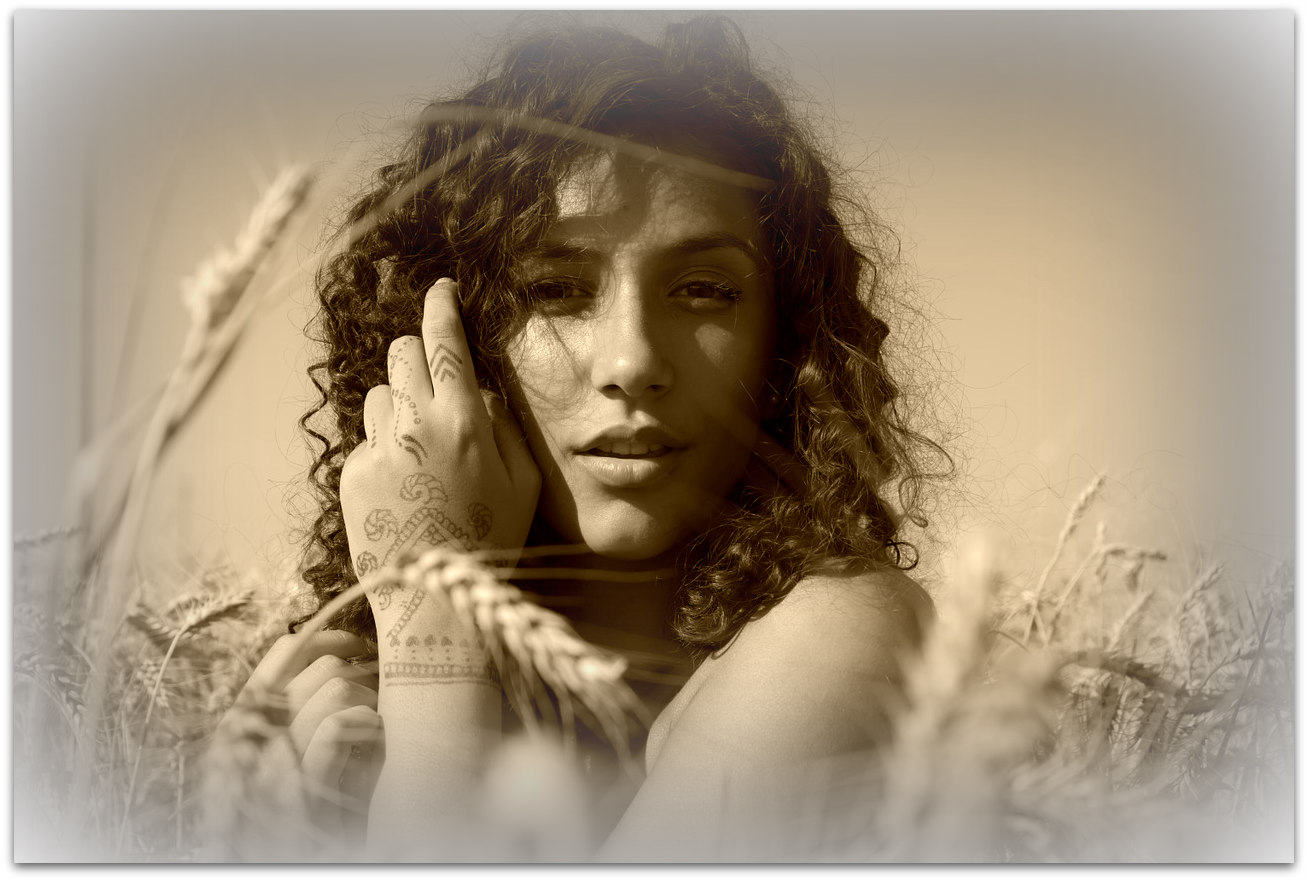
Ruth-like13 “I hope I continue to please you, sir,” she replied. “You have comforted me by speaking so kindly to me, even though I am not one of your workers.”

But that’s not all. He invites her to dine at his table. Now I’m beginning to see a definite shadowing of a future event.

14 At mealtime Boaz called to her, “Come over here, and help yourself to some food. You can dip your bread in the sour wine.” So she sat with his harvesters, and Boaz gave her some roasted grain to eat. She ate all she wanted and still had some left over.”

There’s more to this story as Naomi guides her daughter-in-law through an ancient Hebrew ritual. For the conclusion of this beautiful story, click here: Ruth’s Legacy

Scriptures from the New Living Translation via biblegateway.com

Annabelle’s Ruth

GraceAwardWinnerAfter their husbands perish in a fishing boat accident, Connie Cross determines to follow her mother-in-law, Annabelle, from Southern California to Tennessee. Her misgivings begin as they cross the bridge over the muddy Mississippi River. In their new town, where living conditions are far below their previous expectations, they must set up a household and hunt for work to survive. Thanks to the kindness of Annabelle’s handsome, young cousin, life begins to settle down. But Connie has a secret that could uproot them once again.

Inspired by the Book of Ruth, Annabelle’s Ruth is a 1950’s era story, set in western Tennessee.  How will Connie adapt to her new life amid the cotton farms, racial tension, and culture shock?

2015 Grace Award Winner for General Fiction/Women’s Fiction

Save

Save

Save

Save

Save

A Little History of Cuenca

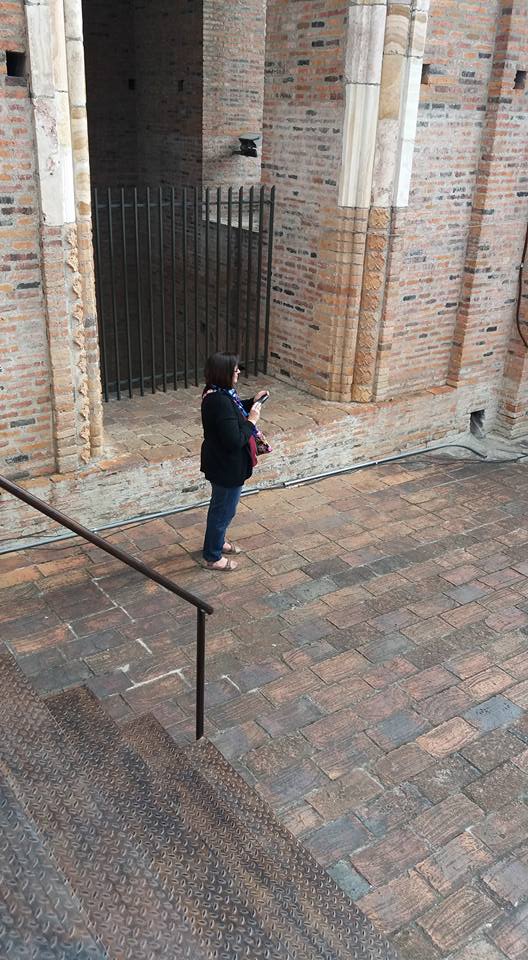
While in Ecuador, we got an up close and personal look at some of the oldest buildings we had ever seen. Even the hotel we stayed in was built in the colonial style, probably for a well-to-do Spanish family in the early days of Spain’s colonization. 20160721_155845

We walked narrow cobbled streets built for horse traffic. And they have traffic snarls morning and night, just like home. I was glad we were walking. Because of our convenient location, you could always find your way back. Just look for the cathedral.

From the ancient Incan ruins at Ingapirca, to the beautiful cathedrals of downtown Cuenca, I was enthralled. I do love history.

In these photos, you can see exactly what went into building this particular (now dilapidated) location. This is what you would find if you began to disassemble most of the downtown buildings. The really old ones, anyway. Can’t you just imagine the native workers creating the mud and straw construction? Another fine example of slave labor, I imagine. I couldn’t help thinking of the ancient Egyptians, who forced the Hebrew slaves to cut their own straw for the brick-making process. I guess it might’ve looked a little like this.

Earlier in the week, we’d spent some time snooping around the old cathedral. Built in 1557, the year Cuenca was founded, it’s called Iglesia de El Sagrario. I was shocked at what lay inside of the ordinary looking exterior. The early Spaniards put some money into this thing. Then they made huge contributions in order to secure burial beneath the sanctuary. This pretty much sealed their entrance into paradise. Or so they believed. These families had beautiful rooms built on either side of the main sanctuary, where they could come and pray in privacy.

It was not built for the masses. It was built exclusively for those of Spanish descent. The locals had to worship outside. Still impressive. I enjoyed the tour.

13707633_10207480945561661_3690816263750498409_nThere is Spanish influence throughout the city.  Many of the other buildings show the exquisite workmanship of the Incas, with their extremely straight cuts through solid rock, forming square foundation stones that fit together with precision. In many places, the outer plastering has been removed so the stones can be plainly seen and admired.

The new cathedral was completed in 1975, took 90 years to complete, and is called the Catedral Metroploitana de la Immaculada Concepcion. Unlike its predecessor, this new church was meant to include everyone, no matter what caste or nationality. If you’re Catholic, you’re welcome. If you’re not Catholic, you’re still welcome to visit and ogle, which is exactly what we did. We climbed the tower to the rooftop which affords a breathtaking view of Cuenca.

13697202_10207511051034279_7378325463621388261_nThe climb is breathtaking, too. A spiral staircase, winding up and up and up. I almost quit and headed back down. It’s a good thing they’ve placed windows at regular intervals. When I finally arrived, I had to pause a few moments. 🙂 If you’ve ever climbed a lighthouse, you’ll know what it was like.

You want to pause once you reach the top anyway, and take it all in. I thought the inside of the cathedral was gorgeous, but this view! Oh, Cuenca! Mountains! Beauty everywhere.

At the risk of conjuring up old memories of next-door neighbors inviting you over to show you their vacation slides (kids, you have no idea how lucky you are not to have to endure those), I will stop here.

I hope you’ve enjoyed this little tour. Suffice it to say, we were wowed by Cuenca, Ecuador and all it had to offer. I’m still processing all that happened during those few short days of service. But I know this–our lives changed and God planted wonderful friendships that I hope will never fade.

Save

Save

Save

Save

Save

How to Let Go

13939521_10154344960722145_5950946198486178684_n

I love this beautiful meme by my friend, Lynn Mosher. This scripture was the base of my main message while in Cuenca, Ecuador. I was able to share this on several occasions.
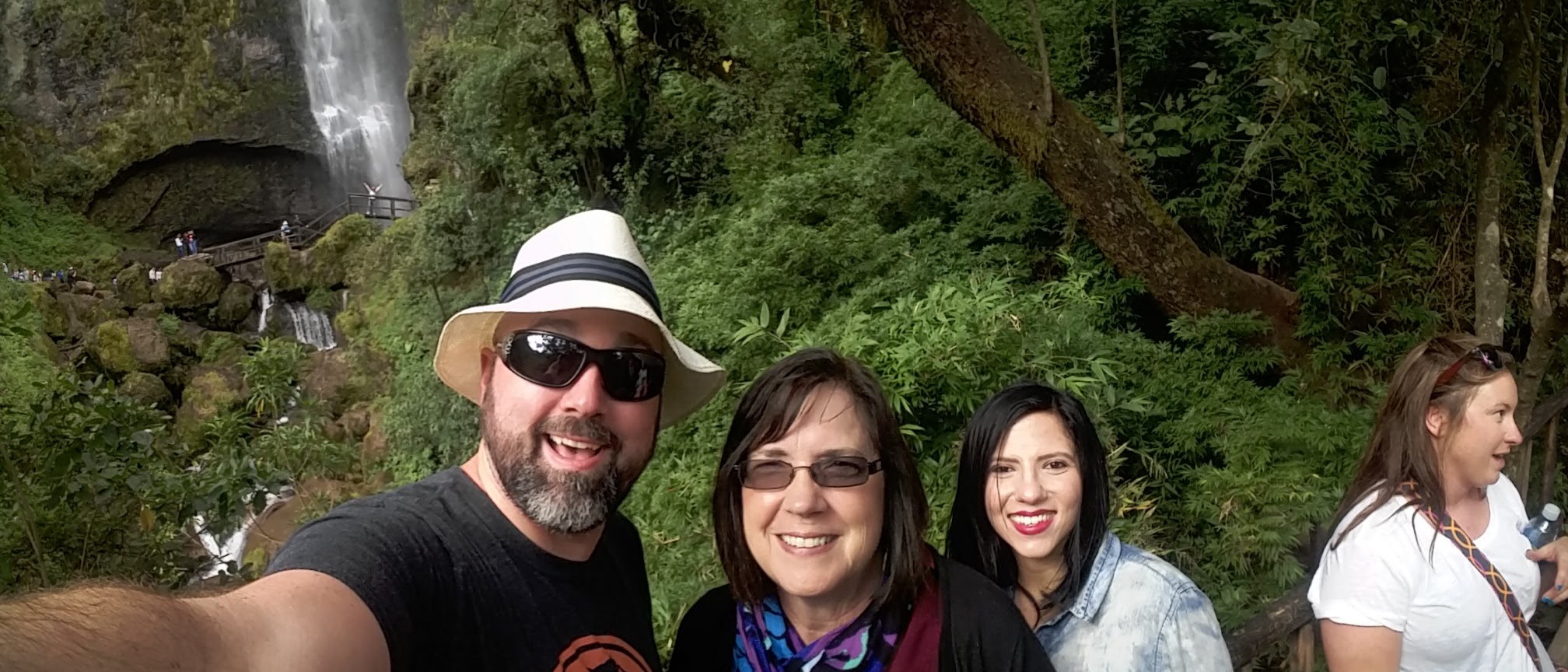
God is speaking in a very specific way through this particular passage of scripture. This is something we need not only to hear, but to pray about and listen to what God has to say to us, His children. Whoever has ears, let him hear what the Spirit says to the churches… –Revelation 2:7 NIV

You’ll find this repeated many times in the New Testament. Jesus included it in the Lord’s Prayer–forgive our sins as WE FORGIVE those who have sinned against us. In some versions, you’ll find this translated as “debts”. I think that’s interesting, because if you forgive someone’s debt, the debt is gone. They don’t owe you anymore. If you have ever taken bankruptcy, you know exactly how this feels. You walk out of the courtroom feeling free.

Our Father wants us to have this experience, and He wants us to share it–by forgiving; releasing the sins of others committed against us. This not only frees the other person, it frees you, too.

It’s not always an easy thing to do, but I hope you will consider it. Don’t pass this to the next generation. Let it go. Teach your children how to forgive one another, and in so doing, you’re showing God’s love and teaching them to love also.

Jesus was once asked, “Master, which is the greatest commandment in the law?”

He answered: “‘Love the Lord your God with all your heart and with all your soul and with all your mind.’ This is the first and greatest commandment. And the second is like it: ‘Love your neighbor as yourself.’ All the Law and the Prophets hang on these two commandments.” –Matthew 22:37-40 NIV


Adventures in Ecuador

We’ve heard a lot of negative words lately. And let’s face it, negative words make you feel bad.

13729160_10207468040039031_4725954065867341417_n
Left to right: Todd, April, Bob, and Betty Owens

So it was a relief to spend a few days outside the U.S., in a place where we saw very little television, and had limited access to the internet. When I did log on to Facebook, I found it easy to ignore the negative stuff. I skimmed through to find the important, like what the family was up to now. Their vacation pictures made me smile.

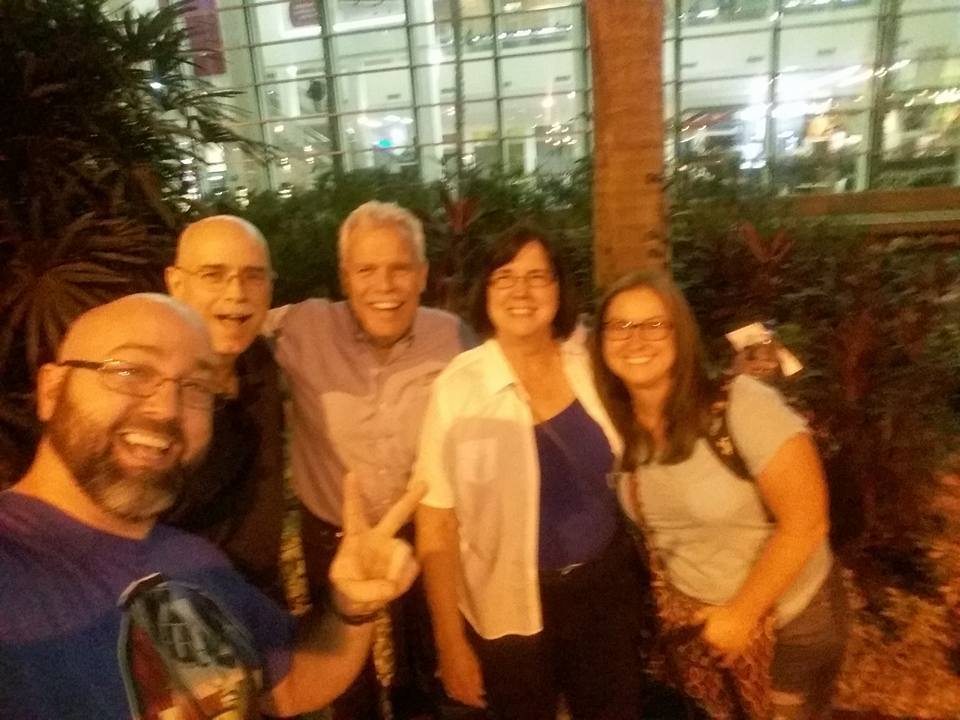
We’re smiling here, though it’s the predawn hours at Louisville International, waiting to board our flight to Miami. Some of us had not slept, or had at least gotten very little sleep.

13692668_10207474719366010_6064020103556420936_n
Left to right: Todd, Bob, Bill McDonald, Betty, and April

This next picture was taken about 19 hours later, on the other side – in Guayaquil, Ecuador. After facing long lines in customs, a friendly face was most welcome. Our host, Bill McDonald got us quickly to our hotel room and sleep, at last…

Cuenca had a calming effect on us. We were very busy, but it wasn’t frenzied busy. We were able to share on a personal level with some of the most important people in the world. Those right in front of us.

Back row: (left to right) Betty, Bob, Mishel Gomez, Front: Todd, Melissa (Mishel's little sis), April
Back row: (left to right) Betty, Bob, Mishel Gomez, Front: Todd, Mishel’s little sister Melissa, and April.


We met a lot of people–missionaries, interns, ex-pats, and native Ecuadorians. We worked with them, talked to them, played football (actual American-style football!), went on adventures, and shared wonderful meals with them.

We bonded with a few of them and they became family.

13669799_10207526235413879_8126676401319711171_n
Todd & Mario at the Incan ruins

Bob (middle photo) was very serious about his encounter with one of the ancients.

Back outside, the weather was unusually warm and sunny for a winter’s day at 10,000 feet. Regarding the end photo – I am not trying to connect to Facebook. I was trying to find pictures I’d taken. Honest.

13782268_10207533011903287_1198769075288032728_nWe spent Sunday with some very special people, first at an inner city church, where I shared a message of forgiveness. I look like a giantess here, but I’m only 5’7″ and wearing flat shoes. The girl who’s interpreting for me is quite a bit shorter than that, but she was an excellent interpreter and so cute.

moments_ff0ce947-dd84-4973-8164-0430611f7ec5_hi_resShe and a number of others joined us for dinner after the service. I loved that table. I could use one just like it for our holiday dinners at home. I’m afraid we’d have to open the front and back door to make room for the thing, though.

Besides Pastor Miquel and his family, we were joined by short-term missionaries, summer interns from the television station, missionary Leah Diaz, fellow Kentuckians, Jeremy and Tiffany Riggs and their family, and Thom and Becky Davis of Unsion Television. Most of these accompanied us on a trip into the Andes to El Chorro de Giron, a beautiful cascade down a mountainside.

We climbed, though I had to stop a couple of times just to breathe. We were at a high altitude, after all. Everyone was relieved when I stopped, since they didn’t want to be the one. 13782199_10207533036983914_6770409064301955671_nNow that I’ve caught my breath…

13707692_10207533036623905_7746721765912708092_n
Thom & Becky Davis
13726825_10207533028183694_1398768228409333723_n
Todd Owens & April Teeter

Of course these two never ran out of breath. We later joined them at the midpoint where we all got wet from the spray. But we loved it!

moments_9c450b20-d46c-4735-8eb8-aedf55f615bd_hi_res
Todd, me, Leah Diaz, and April Teeter

Thus ends another week in Cuenca. The following day, we headed back to Guayaquil to spend our last night in Ecuador. It went so fast!

Later this week, I’ll be posting about some of the interesting buildings we discovered in Cuenca. For further adventures and lots more pictures, you can check out our group page on Facebook at Owens to Ecuador.

Save

A Morning at Mas Cafe

Mas Cafe OutlookI’m writing this post from the coffee shop at Unsion Television in Cuenca, Ecuador. It’s quiet at this hour, but will soon fill to capacity. We’ve had a wonderful week so far in Cuenca. I’ve been busy talking about Annabelle’s Ruth, speaking at various locations and teaching a workshop on creative writing. It’s been a great experience. I’m so thankful to our dear friend, missionary Bill McDonald, for the opportunity.

Meanwhile, my team members have been busy working. The guys are helping Mario renovate the television studio upstairs. They love Mario, whom they dubbed “Super Mario.” April is working here in the coffee shop, alongside our beloved Rocio Romo Ortiz. Rocio is gracious and funny and tends to “adopt” her helpers as family. I loved her smiles and hugs and wonderful cappuccinos.

13775830_10207510951351787_196415123665694259_nLater today, we’re headed to the marketplace to find gifts for our family and friends. The picture to the left is of a vendor we met. My son, Todd, tried on a pair of too-small gauchos, just for fun. They may fit the vendor, but not my big ole gringo son.

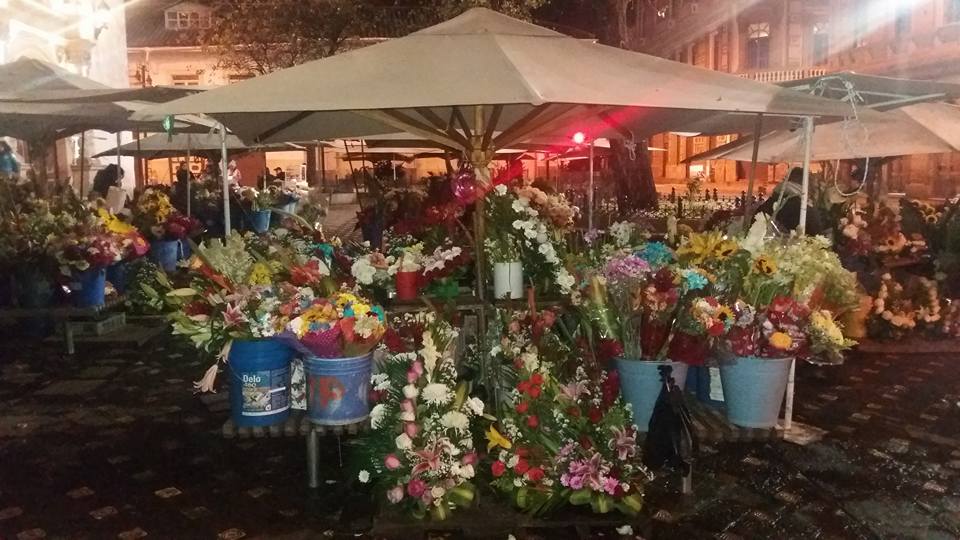
And of course, I have to show you the world-famous flower market. Their prices are low and the flowers are amazing. You can smell the place a block away. 13692488_10207480944801642_5443356270469841507_n


I’ve been impressed with Cuenca. The people are kind and generous and hard-working. Most of what they do is done by hand, the old-fashioned way. We’re staying in the old downtown area with its cobblestone streets and amazing mountain views. CasaDelAquilaThe hotel was once the home of a well-to-do Spaniard. It has the inner courtyards and patio, though a glass roof has been added to protect from the elements. It does tend to rain more often this time of year. And though it gets quite chilly at night, they don’t have heat. They don’t have air conditioning, either. I don’t think they really need it, since it never gets really hot here.

If you go to Cuenca during their winter, take your flannel PJ’s and socks. You’ll be glad you did. They are in the mountains, after all.

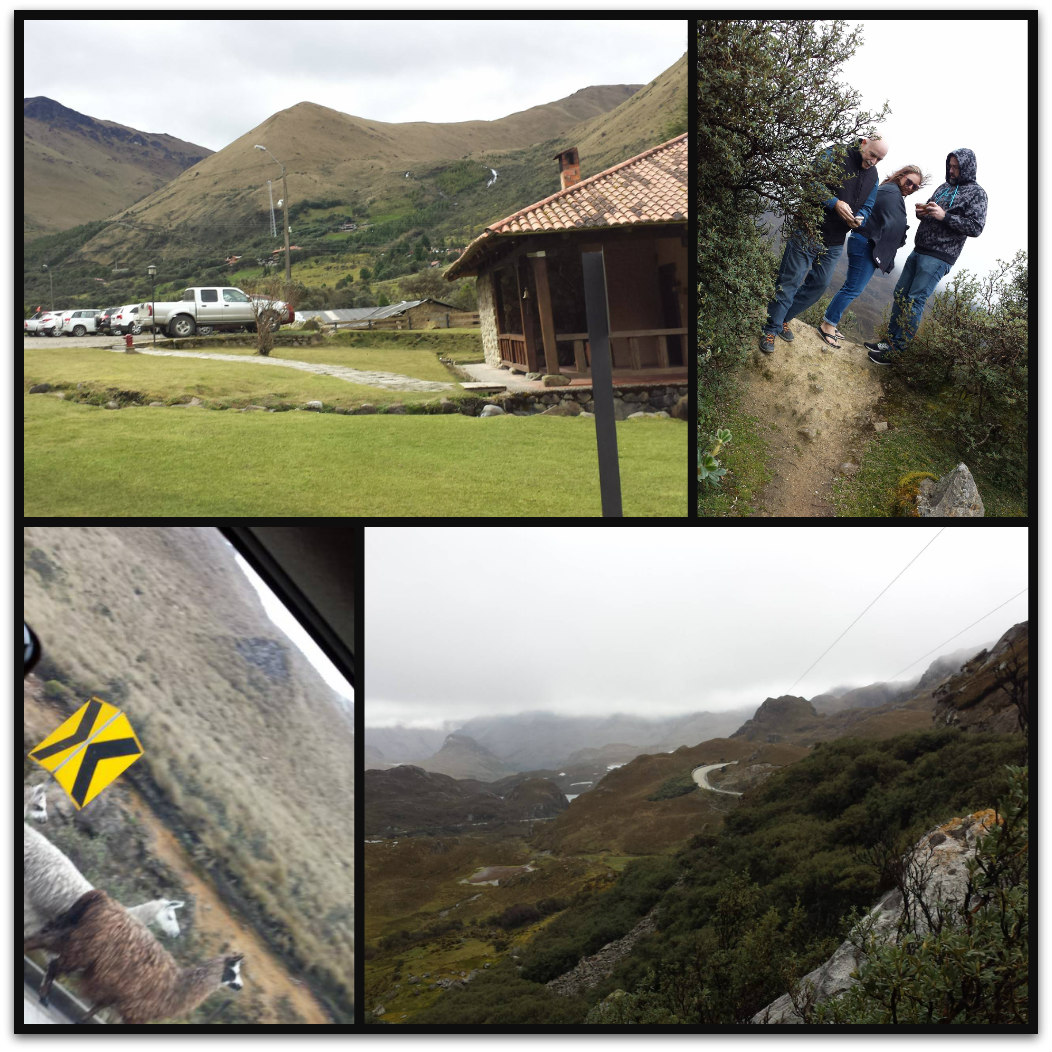
AndesDayOneSpeaking of mountains,  the trip over the Andes from Guayaquil (locally pronounced “why-a-keel”) to Cuenca was … an experience. We piped around hairpin turns to find anything from gigantic boulders in the road, llamas, or small herds of cattle. At one point, Bill jumped out to help recapture a runaway cow.

The bathrooms were an adventure as well. A little on the primitive side, and you can’t flush paper.

13775877_10207479488165227_1482985366801095928_nBefore climbing into the mountains, we passed banana groves, cacao groves and rice paddies. Yes, rice is a staple here, along with the bananas, plantains, potatoes called “papas” and yucca root, which they fry like french fries, or boil.

DrivingtheAndes
Arrow points to oritos.

Bill stopped to buy us a bunch of small bananas called “oritos.” Large bananas are oros, which means gold. The oritos were delicious and the potassium helped us make it through those hills and curves.

The city of Cuenca lies in a valley that resembles a bowl. The altitude ranges between 7,710 to 8,370 feet. That’s higher than Denver–it took us a couple of days to settle in. We walked slower. Even the process of getting into bed at night made me wheeze.

The long name for the city is “Santa Ana de los cuatro ríos de Cuenca” — since there are four rivers which are part of the Amazon watershed. This place has been around for a long, long time. It was originally founded in April, 1557 by the Spanish. I noticed a definite mix of Spanish and natives among the citizens of Cuenca.

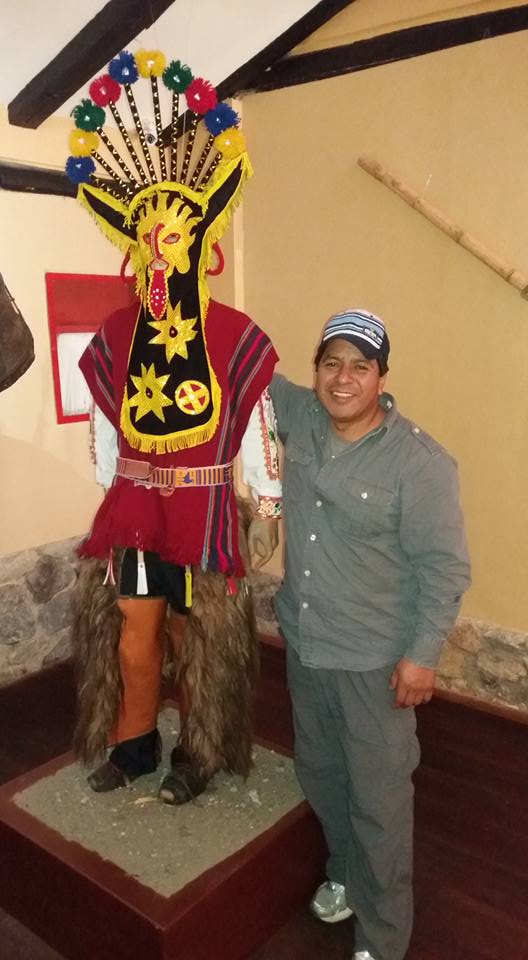
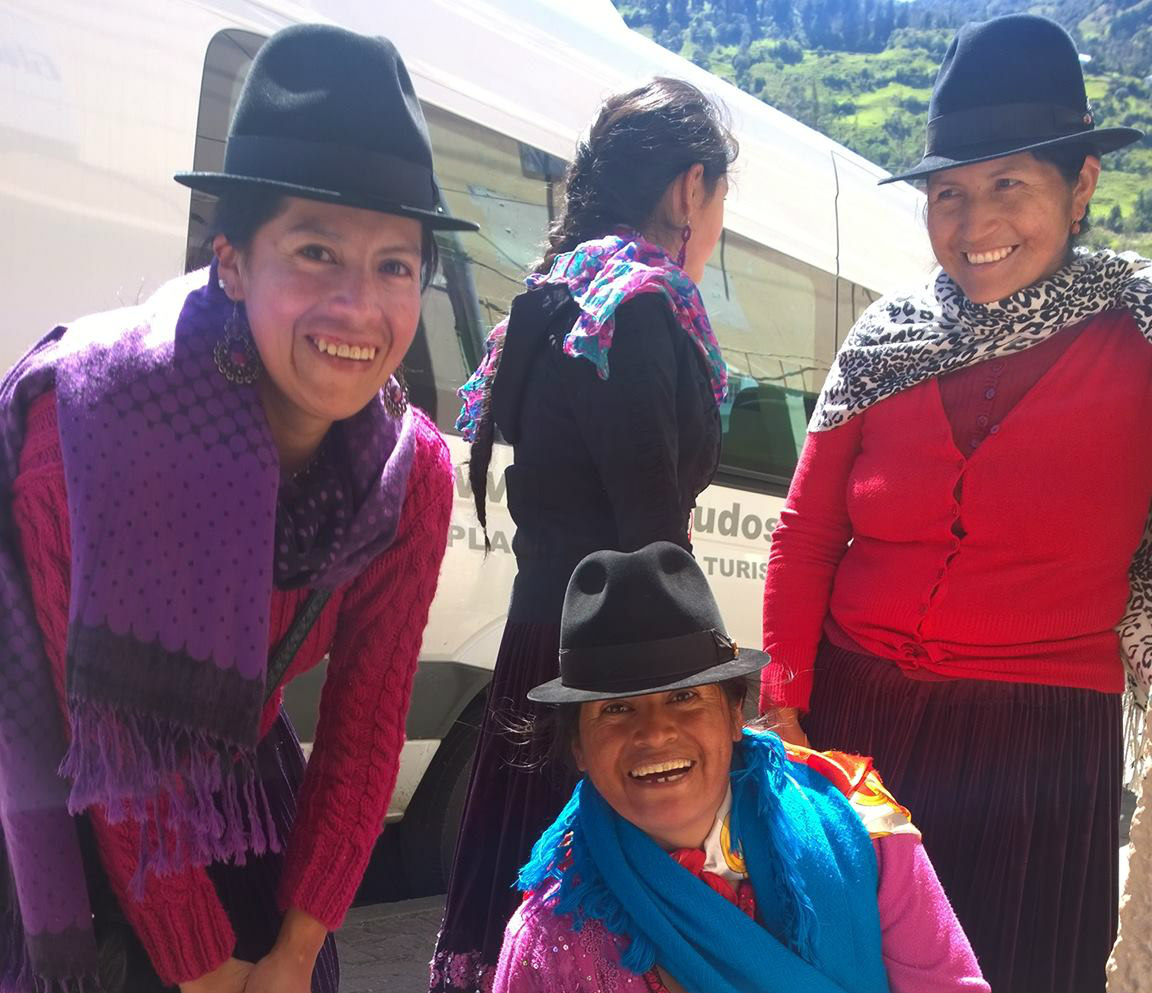
Ecuadoran WomenAs you walk down the streets of the city, you’ll notice many who are dressed in traditional clothing. They’re not wearing costumes. This is their everyday wear. Many are Quichua (Kichwa), but may also be Huaorani, Shuar, or Chachi. They are polite and friendly and very patient, for the most part. They zip along the inner city sidewalks along the narrow cobblestone streets, headed to market or who knows where. Some of them have booths in the marketplace, where they sell handmade textiles, hats, and jewelry or other crafts.

13731577_10207526030368753_6650149760144001886_n
Todd with Mario!

Thus ends the first few days of our Cuenca mission trip.

Next post, I’ll have more to share, after we’ve visited the beautiful cathedrals and vistas. In the meantime, ¡hasta la vista! ¡Dios le bendiga!