My Enemy; My Love

Help! My protagonist has fallen in love with my antagonist!

elizabethdarcy
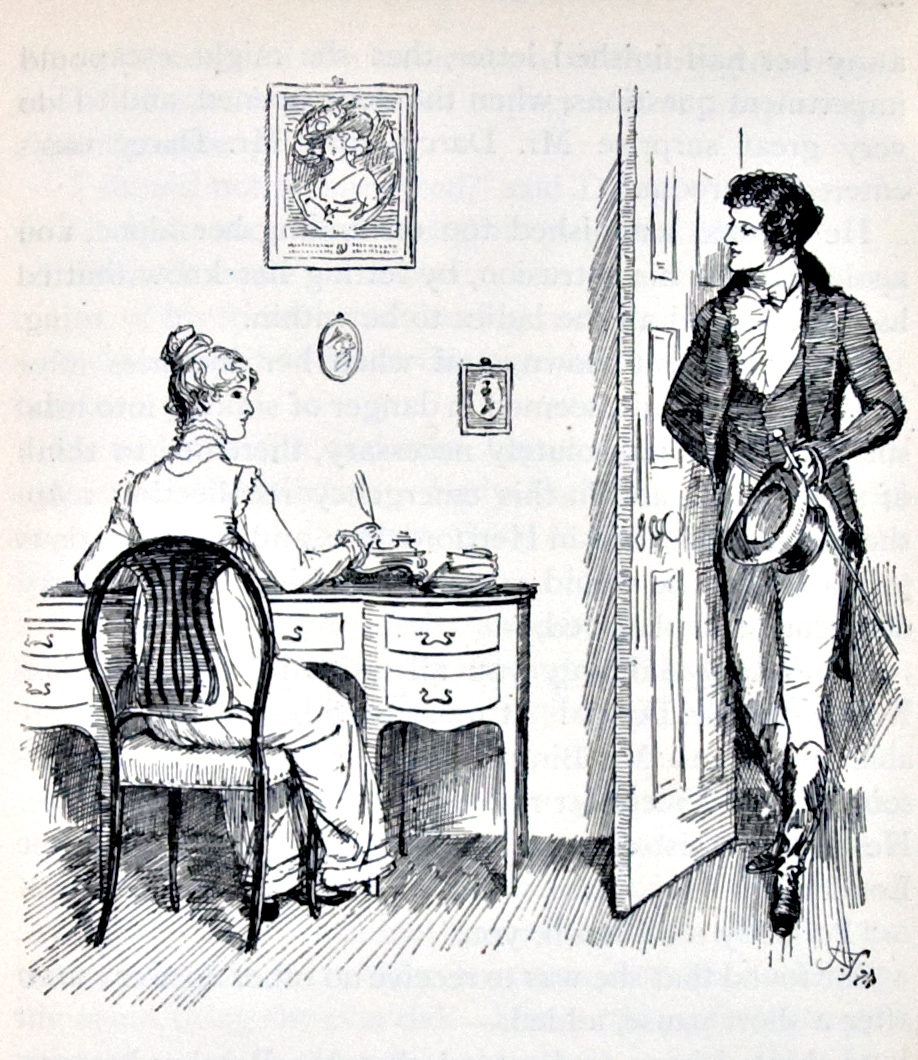
By Hugh Thomson (1860-1920) (Lilly Library, Indiana University) [Public domain], via Wikimedia Commons
Calm down, it happens.

Even in the classics, sometimes the main character falls for the bad guy. For instance, Elizabeth Bennett and Mr. Darcy in Pride and Prejudice. He was the epitome of everything she despised. Yes, he was proud. He was egotistical. His aristocratic nose in the air, he looked down on everyone. That was his way. He had money–lots of it–and power, and continually sets himself and his close friends above others.

After she came to know him better, Miss Bennett’s mind began to soften toward Fitzwilliam Darcy, (her knees and heart, too) but not until she’d completely humiliated him (and herself). In true Austen fashion, the story comes full circle. Miss Elizabeth Bennett realizes she is every bit as proud and prejudiced as he. She falls madly in love with him. He is her perfect match, in every way.

Of course, they aren’t really considered an antagonist, but these guys definitely have antagonistic characteristics. It seems to be a trend these days, with the popularity of Hunger Games. Katniss is sometimes (okay, most of the time) at odds with Peeta. He redeems himself. She ends up with him instead of the truly sigh-worthy Gale.

Even Nicholas Sparks’ A Walk to Remember has the bad boy winning over the sweet lead character. By the end of the story, he’s won our hearts, too.

love-560783_1280Are you a fan of this type of love story? Or do you prefer the slow warming of a relationship, unencumbered by anger and hate? Speaking of anger and hate, The Taming of the Shrew and Ten Things I Hate About You come to mind. Sparks fly in those two stories. Oh, if looks could kill. Kat (in Ten Things) claws, spits, and scratches, while Patrick hangs on with quiet determination.

Will they end up happy? Or will they spend their lives fighting? Does anyone really care once the happy ending leaves you sighing with satisfaction?

The man who later became my husband was not exactly an enemy, but I didn’t like his type at all. Until his life changed, and our paths crossed again. I was still hesitant, but he was determined. Our love story is ongoing.

All’s Fair in Love and War!

reading-925589_1280Do you have a favorite girl-hates-boy-till-girl-loves-boy story? One I haven’t mentioned here? When your protagonist falls in love with the antagonist, things can get very interesting. I say let it happen. See where this one leads. Definitely gonna be in one of my next books.

To the Woman in the Prayer Room

Jennifer Hallmark, Linda Yezak, and me at ACFW

While attending the American Christian Fiction Writers (ACFW) conference three weeks ago, my heart was heavy. My husband was ill at home and I felt some anxiety over that. ACFW always provides a prayer room, so I found it and entered. My good friend, Linda Yezak was the volunteer in charge at the moment. I didn’t bother her, but crossed the room and found a seat. I just wanted to spend some time in prayer. There was only one other person there–a woman, unfamiliar to me.

As soon as I sat down, I was surrounded by a tangible peace and something else–a sweet spirit–that’s the only way I can describe it. I sat there, barely able to pray, just absorbing the atmosphere. It was precious. I felt loved and lifted up. After a few minutes, the other woman got up and walked out of the room. Though the peaceful atmosphere remained, that sweetness left with her.

I don’t know who she was. I never saw her again.

But I’m grateful. That feeling sustained me and I remembered it often over the next few days.

In last week’s blog post, I hinted that something unexpected had occurred in my life, and interrupted my regular blog schedule. I’d completely missed a week. When I returned home from ACFW on Sunday afternoon, I found that my husband had not improved. He’d grown worse. He was shaking in hard chills and struggling to breathe. I wanted to take him to the emergency room right away. He wouldn’t go. He wanted to wait until morning and go to his doctor. He’d been to the doctor the previous week and had tests run.

A little backstory– he’d been sick on and off for over a year and had lost a significant amount of weight. But the doctor had not been able to find the cause. No one had. Early Monday morning, his doctor called and ordered him to go to the hospital. My husband was in acute renal failure.

In the hospital, after the crisis

Unexpected. We were in shock. This had to be a mistake. How could something like that happen? He was admitted and rushed through numerous diagnostic procedures that revealed blockages in both kidneys. Without an emergency dialysis treatment, he was hours from death. I was devastated. I’d seen my dad go through kidney failure–years of weekly dialysis–and a kidney transplant that succeeded until he died suddenly of a blood clot in his lung. I didn’t want my husband to have to go through that.

I prayed. I called on all my friends and family to pray. And often, throughout the next few hours, I remembered that sweet presence in the ACFW prayer room.

I meditated on it as I sat at my husband’s hospital bedside while his blood ran through the dialysis machine. I was consumed by peace. I laugh now, remembering myself sitting there eating a veggie sandwich from Jimmy John’s while my husband endured the procedure. Okay, I was really hungry, but I had an assurance that everything was going to be all right. He was sleeping, by the way.

We had no idea what the future held. Would he have to continue receiving dialysis? Were his kidneys permanently damaged? These fears danced through our minds on and off over the next couple of days, as prayers rose on our behalf, throughout our sphere of influence.

A lighter moment - sharing a meal in Cuenca, Ecuador this summer.
A lighter moment – sharing a meal in Cuenca, Ecuador earlier this summer.

God answered. The unexpected thing brought to light a problem my husband had had over the last couple of years. Kidney stones. They’d almost completely blocked his kidneys. This was making him very sick, as toxins filled his body. Once this issue was addressed, he began to recover. Rapidly. He still has to go through some things, but he’s getting stronger every day.

And he won’t need additional dialysis.

Yes, we were shocked by the initial news, but our trust is in God. He brought us through. I’m thankful to Him and to all our friends and family who prayed for us and with us during those days of uncertainty. And I’m thankful for that unknown woman in the ACFW prayer room. It’s possible she was there praying for herself, but God used her as a vessel–a conduit. The sweetness spilled over onto me. God’s presence stayed with me through a very difficult time.

Save

Save

Save

Save

Save

Are You Ready for the Unexpected?

E.M. Bounds/Prayer--MemeI had no post last week! That’s because last week held the unexpected for me. But God is never surprised. In fact, I’d been warned. I had that “niggling feeling” inside. You know the one– it lets you know–something’s coming.

When you’re caught unaware, it’s good to know that you’re ready. You’re prayed up, filled with the presence of God, and able to lean on His presence, draw on His strength.

His word is strong in you. Not the mystical “force” — but God’s Word.

I pray that you have that peace. If you don’t, now’s the time. Something’s coming. Something unexpected, and you’ll need to be ready.

If you want to know where to begin, here’s one of my favorites–Ephesians.

Save

Save

Save

Ruth’s Legacy

Beyond the Book of Ruth, Part 2

To read Part 1, click here.

17So Ruth gathered barley there all day, and when she beat out the grain that evening, it filled an entire basket. 18 She carried it back into town and showed it to her mother-in-law. Ruth also gave her the roasted grain that was left over from her meal. (The Book of Ruth, verses 17-18)

As soon as I read that Ruth had leftovers from the dinner provided by Boaz, I knew she’d share them with Naomi. This tells a lot about Ruth’s character. She didn’t hoard the leftovers, she took them home to her mother-in-law.

Ruth-likeWhen Ruth told Naomi about her day, Naomi pronounced a blessing over Boaz. “He is one of our family’s redeemers,” she told Ruth. What did this mean? It meant that he was a near kinsman of Elimelech. Through his acts of kindness, Boaz was also showing respect for the dead.

I believe this is when Naomi began to form a plan. We know she trusted in Jehovah, so we’ll assume she prayed for direction. When the barley harvest was coming to an end, she gave some very specific instructions to her daughter-in-law:

“Tonight he [Boaz] will be winnowing barley at the threshing floor. Now do as I tell you—take a bath and put on perfume and dress in your nicest clothes. Then go to the threshing floor, but don’t let Boaz see you until he has finished eating and drinking. Be sure to notice where he lies down; then go and uncover his feet and lie down there. He will tell you what to do.” –Ruth 3:2-4

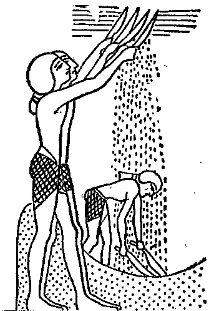
C+B-Agriculture-Fig12-WinnowingAfter a grain harvest, the men “winnowed” the grain, which separated the grain from the stalk and chaff (the breeze or wind blew away the lighter outer covering of the grain). Then they must guard the grain until morning when it would be bagged or otherwise stored. Of course, after all their labor, they celebrated by “eating and drinking.”

Because Ruth trusted Naomi, she obeyed her. This obedience placed Ruth in a precarious position, but Naomi knew Boaz was a man of integrity, so she didn’t worry. While Boaz slept, Ruth “uncovered his feet, and lay down.” He woke around midnight and became alarmed when he found a woman lying there. He was confused. Had he drunk that much?

pink-1431073_1280When she identified herself, and spoke as Naomi had instructed, Boaz knew what was happening. In a way accepted by the customs of their time, she’d proposed to Boaz. He was impressed. You see, Boaz was not a young man. We know this because he says in verse 10, “You are showing even more family loyalty now than you did before [in following Naomi to Bethlehem], for you have not gone after a younger man, whether rich or poor.

So if you were always thinking Boaz was a young hunk, sorry to destroy your fantasy. He was probably less like a Chris Hemsworth, more of a Harrison Ford. Oh well. Older guys have value, too. Maturity counts for something. Established, reliable. A man who is able to provide for both Ruth and Naomi. Hey, he was a landowner with servants. She could do worse.

sandals-462870_1280
Men removed a shoe to signify an agreement.

Even though Boaz wanted to marry Ruth, there was a nearer kinsman. So he promised to have a word with that guy. Naomi had confidence that Boaz would take care of everything that very day.

And that’s exactly what he did. He spoke to the man who was a closer relation of Elimelech’s. This man was definitely interested in the land belonging to Naomi, but he was unwilling to take on the widow of Mahlon (Ruth), since it would threaten his own children’s inheritance (according to Levitical law). Boaz was unencumbered by such concerns. There is no mention that he had a wife and/or family. So he was willing to take them in, with full knowledge that his first offspring would be considered the child of his deceased kinsman, Mahlon, son of Elimelech.

The happy ending: Boaz marries Ruth. He gets the property and the mother-in-law as well. And when the time came, a son was born to Boaz and Ruth.

baby-499976_1280Naomi took the baby and cuddled him to her breast. And she cared for him as if he were her own. 17 The neighbor women said, “Now at last Naomi has a son again!”–Ruth 4:16-17

They named the baby Obed. Obed grew up and had a son named Jesse, who grew up and had many sons. The last of those was named David. He was a shepherd who was later anointed as king by the prophet Samuel. David would become known as one of the greatest kings of Israel, and he and his great-grandmother Ruth would always be included in the lineage of Jesus.


A little bit of trivia

Mahlon, Ruth’s first husband, was Naomi’s second son. His name means “man of weakness or sickly”. If he was given this name at birth, he must have always been weak. His older brother’s name, Chilion (pronounced Killy-on) literally means “wasting away” –so this gives a little insight into Naomi’s early life. Her sons were not hale and hearty. She may have realized they weren’t going to grow old, so took wives for them early, hoping to have grandchildren to inherit Elimelech’s property.

Elimelech had also died early. Perhaps if the sons had produced children, they would’ve inherited the weakness of their fathers.

branch-304088_1280(All scriptures from the New Living Translation, via biblegateway.com)

Save

Save

Save

Beyond the Book of Ruth

blue-692467_640“But Ruth replied, “Don’t urge me to leave you or to turn back from you. Where you go I will go, and where you stay I will stay. Your people will be my people and your God my God. Where you die I will die, and there I will be buried. May the Lord deal with me, be it ever so severely, if even death separates you and me.” — Ruth 1:16-17

I love The Book of Ruth. You may remember hearing the passage above, sung or spoken at weddings. Though originally spoken to a mother-in-law who had become more than an in-law, the passage is quite romantic, isn’t it?

castle-valley-500241_1280I’ve read The Book of Ruth more times than I can count, so I thought I knew the whole story. If you had asked me, I would’ve said, “The Book of Ruth is a wonderful story–a historical account of one of the four women mentioned in the lineage of King David, one of only six  women in the lineage of Jesus.

It’s short–only four chapters–so it doesn’t take long to read. Unless you like to dig. BUT, is it really just history? Is it only a romantic tale? I believe each book is included in the Bible for a reason.

Is there a reason beyond sharing the history of this woman?

When I wrote the novel, Annabelle’s Ruth, I did a little digging. I read and re-read the Biblical story until I could relate it in my own words. But after my novel was published, I was asked to tell a little about the history, so I studied it again.

I was surprised by what I saw.

Especially since I’d read it so many times. How had I missed what I found this time? If you’re familiar with the story, you know how it begins. The widows are leaving their home in Moab. Naomi persuades one daughter-in-law to return to her family, but Ruth refuses to leave. She insists on staying with the woman who has become a mother to her. The woman who’d taught her to believe in the God of the Hebrews.

barley-1117282_1280And I’m sure, you remember how Ruth went out to find work and ended up in the field of a man who was a kinsman of Naomi’s husband. His name was Boaz. He had heard of Ruth. Good things were spoken about her in Ephratah (Bethlehem)–and that was saying something. The Ephrathites could be a little judgmental about their non-Hebrew neighbors.

Boaz first drew my attention and appreciation by choosing to show kindness to this foreign woman who had shown great loyalty and love for his kinswoman. After all, she’d willingly given up the possibility of remarriage and having a family of her own, by following Naomi. That kind of thing was important in those days.

One thing I’ve learned: when you make that kind of sacrifice in life–for love and faith–God sees.

So, Boaz gave orders that his reapers drop extra barley for the woman to pick up. He ordered his men to keep their hands off her. And then he does something that pierced my heart. When he speaks to Ruth, he tells her to stay in his fields, so he can protect her. And then he invites her to partake of the water provided for his workers. I was immediately reminded of Jesus at the well in Samaria, offering living water to the woman at the well.

basket-1195754_1280Ruth 2:10-14 “Boaz went over and said to Ruth, “Listen, my daughter. Stay right here with us when you gather grain; don’t go to any other fields. Stay right behind the young women working in my field. See which part of the field they are harvesting, and then follow them. I have warned the young men not to treat you roughly. And when you are thirsty, help yourself to the water they have drawn from the well.”

10 Ruth fell at his feet and thanked him warmly. “What have I done to deserve such kindness?” she asked. “I am only a foreigner.”

11 “Yes, I know,” Boaz replied. “But I also know about everything you have done for your mother-in-law since the death of your husband. I have heard how you left your father and mother and your own land to live here among complete strangers. 12 May the Lord, the God of Israel, under whose wings you have come to take refuge, reward you fully for what you have done.”

Ruth-like13 “I hope I continue to please you, sir,” she replied. “You have comforted me by speaking so kindly to me, even though I am not one of your workers.”

But that’s not all. He invites her to dine at his table. Now I’m beginning to see a definite shadowing of a future event.

14 At mealtime Boaz called to her, “Come over here, and help yourself to some food. You can dip your bread in the sour wine.” So she sat with his harvesters, and Boaz gave her some roasted grain to eat. She ate all she wanted and still had some left over.”

There’s more to this story as Naomi guides her daughter-in-law through an ancient Hebrew ritual. For the conclusion of this beautiful story, click here: Ruth’s Legacy

Scriptures from the New Living Translation via biblegateway.com

Annabelle’s Ruth

GraceAwardWinnerAfter their husbands perish in a fishing boat accident, Connie Cross determines to follow her mother-in-law, Annabelle, from Southern California to Tennessee. Her misgivings begin as they cross the bridge over the muddy Mississippi River. In their new town, where living conditions are far below their previous expectations, they must set up a household and hunt for work to survive. Thanks to the kindness of Annabelle’s handsome, young cousin, life begins to settle down. But Connie has a secret that could uproot them once again.

Inspired by the Book of Ruth, Annabelle’s Ruth is a 1950’s era story, set in western Tennessee.  How will Connie adapt to her new life amid the cotton farms, racial tension, and culture shock?

2015 Grace Award Winner for General Fiction/Women’s Fiction

Save

Save

Save

Save

Save